Garden Oaks vs Oak Forest in 77018: Compare the Feel
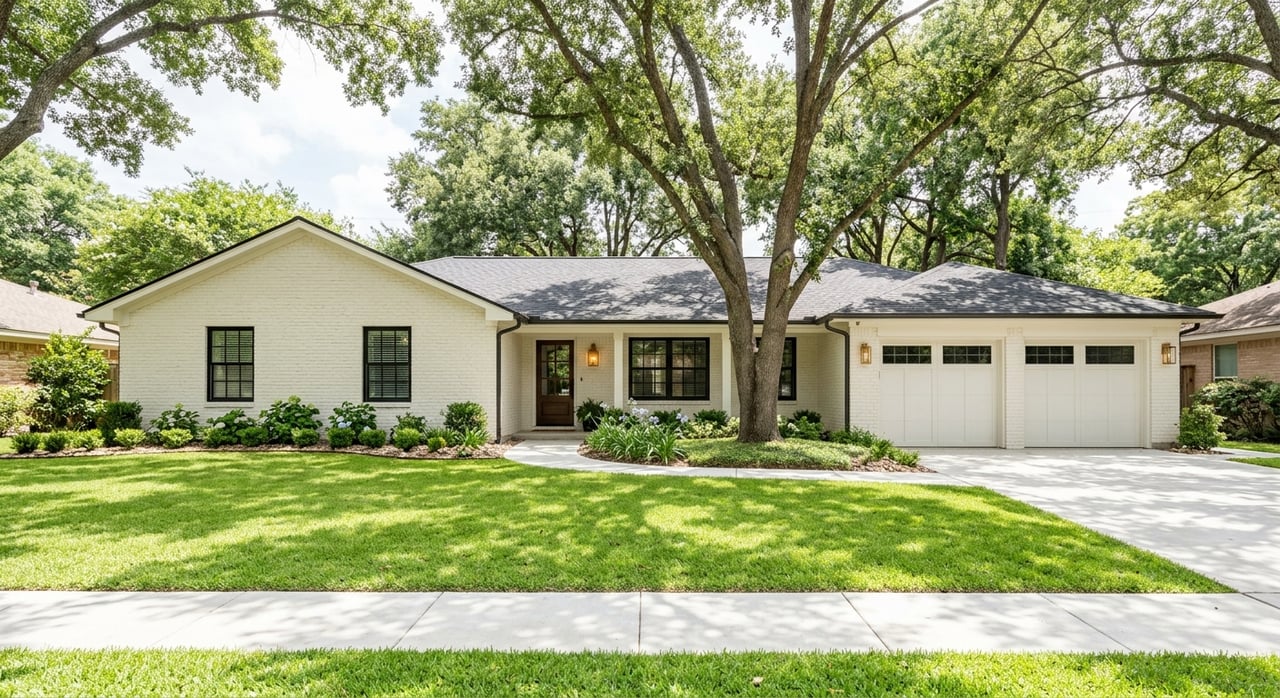
If you are torn between Garden Oaks and Oak Forest, you are not alone. These two 77018-area neighborhoods are often mentioned together, but they do not feel the same once you start comparing lot sizes, home styles, school options, and pricing. If you want a clearer way to decide which one fits your goals, this guide will walk you through the differences that matter most. Let’s dive in.
Garden Oaks and Oak Forest sit within the broader Oak Forest/Garden Oaks area that the City of Houston places between Pinemont, Shepherd, North Loop West, and US 290. Both benefit from strong access to key routes like Loop 610, US 290, and Shepherd, which helps explain their long-term appeal for in-city buyers.
The biggest difference starts with how they were built. Garden Oaks began in 1937 as a planned community with curving streets and an earlier housing base, while Oak Forest was developed right after World War II and became Houston’s largest residential development at the time. That history still shows up today in the street patterns, lot sizes, and overall feel of each neighborhood.
For many buyers, the choice comes down to land and housing character. Garden Oaks has 1,400 single-family properties, a median lot size of 11,845 square feet, and a median year built of 1947. Oak Forest East has 3,799 single-family properties, a median lot size of 7,428 square feet, and a median year built of 1955.
That means the typical Garden Oaks lot is about 60% larger than the typical lot in Oak Forest East. If you want more yard space, more breathing room between homes, or a property where lot size plays a major role in value, Garden Oaks usually stands out.
Oak Forest West also reflects the broader Oak Forest story, with 1,635 single-family properties, a median lot size of 7,410 square feet, and a median year built of 1955. It shares the postwar roots of Oak Forest East, but its pricing profile is different, which can matter if budget is a major part of your search.
Garden Oaks tends to show more variation in architectural style. Recent listings include traditional, ranch, craftsman, contemporary or modern, and modern farmhouse homes. Because the neighborhood has an older lot pattern and larger parcels, it often supports especially large new construction alongside original homes and remodels.
If you are drawn to older neighborhood character but still want the option of a substantial newer home, Garden Oaks often delivers that mix. The result can feel more land-rich and a bit more custom from block to block.
Oak Forest usually reads as a more classic postwar subdivision market. Recent listings show ranch, traditional, and contemporary or modern homes, with a housing base that still reflects its 1950s development pattern.
You will still find infill and rebuild activity in Oak Forest, but the underlying feel is often more uniform than Garden Oaks. For buyers who like the consistency of a postwar neighborhood with a wide range of home updates, that can be a plus.
Both neighborhoods are deed-restricted, but they handle those rules differently. In Garden Oaks, the neighborhood was platted into five sections, and each section has its own deed restrictions. That matters because restrictions can vary depending on the specific property you are considering.
In Oak Forest, there is a voluntary homeowners association, optional dues, and an Architectural Review Committee that reviews renovation and new construction plans before they go through city permitting. If you are planning a major remodel or building new, that review process can affect your timeline and your design path.
For buyers who want to renovate, build, or invest, this is not a small detail. It is one of those neighborhood mechanics that can shape your experience after closing just as much as the house itself.
School assignments in Houston ISD are tied to the property address, so it is important to verify the exact assignment for any home you are considering. In this area, school options are one of the clearest practical differences between Garden Oaks and Oak Forest.
Garden Oaks is closely associated with Garden Oaks Montessori, a Montessori magnet campus with an environmental-science emphasis. Zoned families enroll there for K through 5, and the campus also serves PK3 through 8 magnet students.
Oak Forest Elementary is the zoned neighborhood elementary tied to Oak Forest’s development history. For later grades, Oak Forest has a long-standing connection to Frank Black Middle School and Waltrip High School, with Black founded in 1957 to serve Oak Forest and nearby neighborhoods.
Pin Oak Middle is application-only, so it should be viewed as a school-choice option rather than a default assignment. In simple terms, Garden Oaks may appeal more if you are specifically interested in the Montessori option, while Oak Forest often fits buyers who prefer the feel of a more traditional neighborhood-school path.
Price is another area where the differences become clear. Garden Oaks posted a median sold price of $662,500 in March 2026 on 6 transactions, with 30.5 days on market. Oak Forest East posted a median sold price of $640,000 in February 2026 on 22 transactions, with 25 days on market.
Oak Forest West came in lower, with a median sold price of $320,000 in March 2026 on 17 transactions and 21 days on market. That wider price spread is part of what makes the broader Oak Forest market attractive to buyers who want more flexibility.
On a price-per-square-foot basis, Garden Oaks also leads the comparison. Its median sold price per square foot is $377.25, compared with $348.71 in Oak Forest East and $240.27 in Oak Forest West.
Inventory can shape your search just as much as price. Current active inventory shows 41 homes in Garden Oaks, 99 in Oak Forest East, and 35 in Oak Forest West.
If you want more options to compare in a single search cycle, Oak Forest East currently offers the most choice. If you are focused on a narrower set of homes with larger lots and a distinct neighborhood identity, Garden Oaks may still be worth the tighter inventory.
Garden Oaks monthly numbers are based on fewer transactions, so its median sold price can move more from month to month. That does not make the data less useful, but it does mean you should read short-term changes carefully.
In a lower-volume segment, one or two sales can shift the monthly median more than in a neighborhood with higher transaction counts. That is one reason hyperlocal interpretation matters when you are comparing these two areas.
The best choice usually depends on what matters most to you day to day. Both neighborhoods offer strong in-city access and active housing demand, but they serve slightly different buyer priorities.
On paper, Garden Oaks and Oak Forest can look close in price, especially when you compare Garden Oaks with Oak Forest East. In person, though, the experience can feel very different.
Garden Oaks often feels more shaped by lot size, earlier planning, and higher land sensitivity. Oak Forest often feels broader and more flexible, with a larger housing pool and more variation depending on whether you are looking at East or West.
That is why it helps to go beyond headline pricing. Two homes with similar asking prices may offer very different long-term value depending on lot size, renovation path, school assignment, and the kind of neighborhood setting you want.
If you are weighing Garden Oaks versus Oak Forest, the right next step is to compare actual homes through the lens of your priorities, not just the ZIP code. Kenneth Zarella can help you narrow the search, interpret the market, and decide which neighborhood makes the most sense for your move.

We pride ourselves in providing personalized solutions that bring our clients closer to their dream properties and enhance their long-term wealth.